


Technical details
Description, documents, and source code.
The Gigatron TTL is a retro-style 8-bit computer, where the CPU is implemented by a set of TTL chips instead of a single microprocessor
What is it?
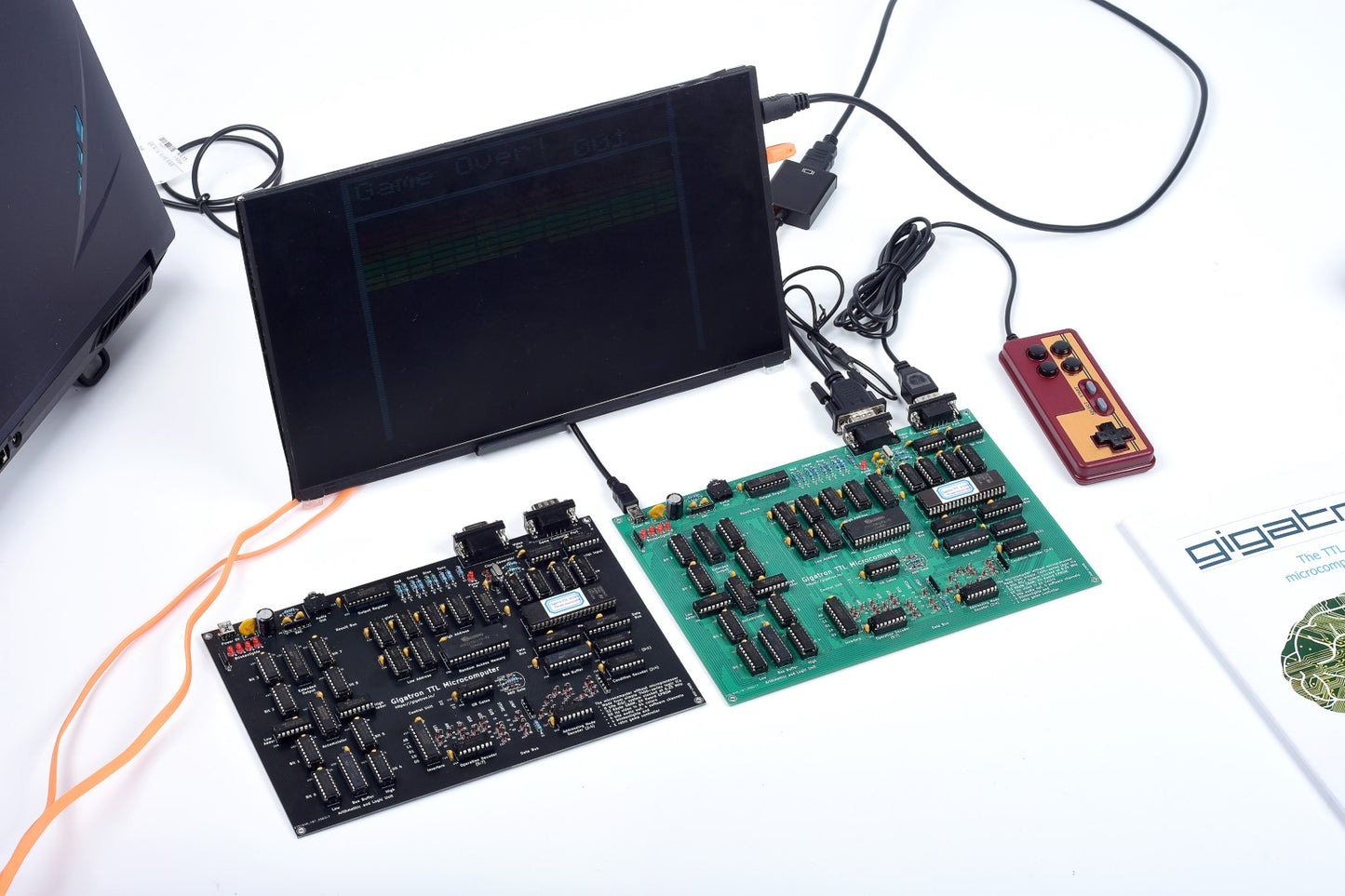
Gigatron is a TTL microcomputer that you build yourself. The Gigatron TTL is a retro-style 8-bit computer, where the CPU is implemented by a set of TTL chips instead of a single microprocessor, imitating the hardware present in early arcades. Its target is the computing enthusiasts, for studying or hobby purposes.
Why did you make it?
For my student to study and the original Maker not offer it now.
What makes it special?
The Gigatron TTL microcomputer is a minimalistic retro computer. It’s special in its own oddball way, because it has absolutely no complex logic chips in it, not even a microprocessor! Its CPU is built out of a handful of classic 7400-series ICs, colloquially known as the TTL logic series. These chips combined form a powerful 8-bit processor.
Besides running applications, this processor performs functions that traditionally require dedicated peripheral chips for video, sound and other I/O. By eliminating these the hardware remains small and understandable. Still the single-board system works as a full-blown microcomputer that you can play video games with.
Now you can easily build one yourself. As you build, learn what happens inside a CPU by looking inside one. See the functional units, look inside the Arithmetic and Logic Unit, see its truth tables and learn what makes up a ROM. Then go on to enjoy playing the built-in retro video games or write little programs in BASIC. You can also hack it in any way you like if you have a taste for that.